
Construction · 5 min read
The 2026 UK construction site security checklist.
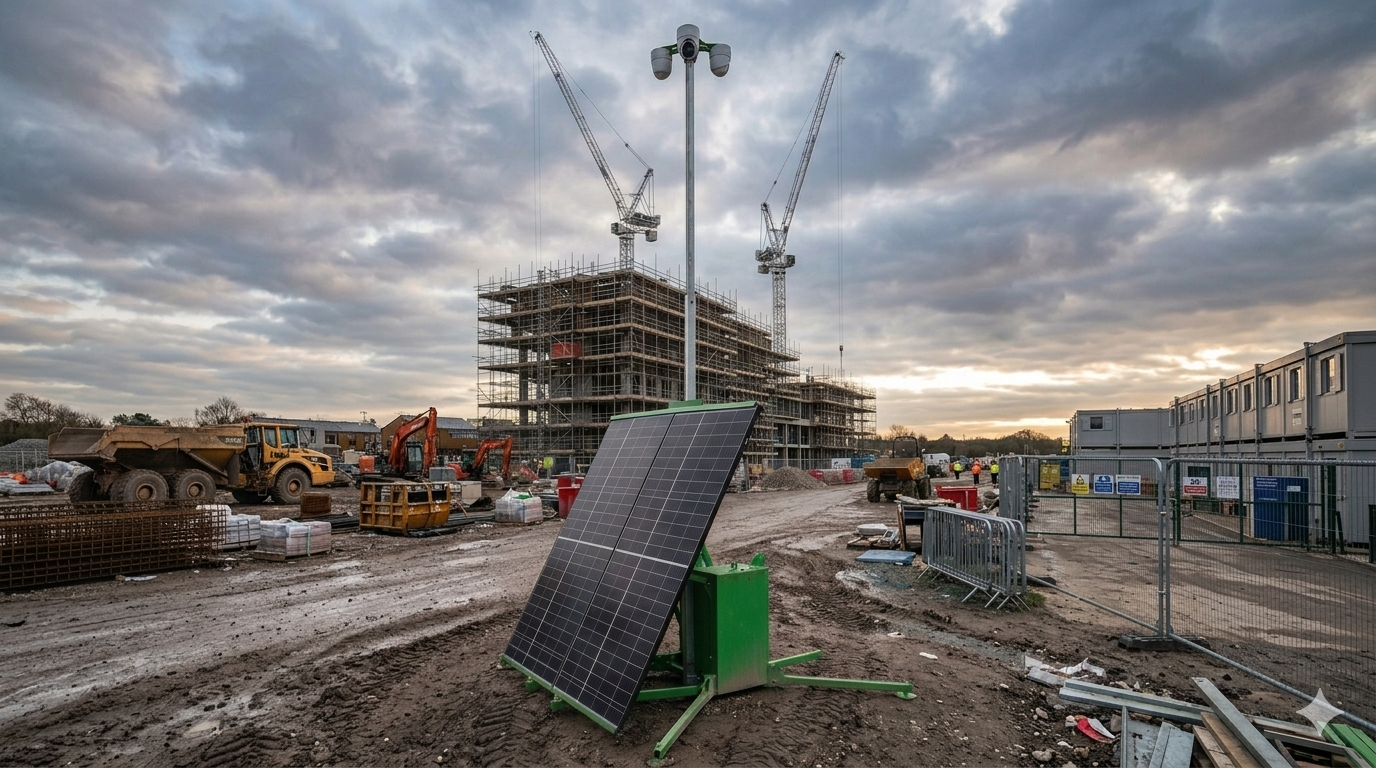
UK construction sites lost approximately £800m to plant, materials and fuel theft last year. The pattern hasn't changed in a decade: vulnerable sites get hit during weekends, bank holidays and overnight gaps when supervision is thin. What has changed is the toolkit available to site managers, and the bar that insurers expect you to meet.
This is a working 10-point checklist for site managers running active builds in 2026. Walk it before mobilisation, again at first-fix, and a final time before any planned shutdown. Most points cost nothing to implement; the rest are a fraction of the cost of one stolen excavator.
1. Risk profile your site at mobilisation
Every site is different. Inner-city demolition has a different threat profile to a remote rural new-build. Map your specific risks against four categories: high-value plant exposure, copper and metal exposure, fuel exposure, and antisocial behaviour exposure. The risk profile drives what security measures justify their cost.
2. Lockable perimeter, with one controlled access point
Heras fencing or hoarding is non-optional. One main access point with a manned or electronic gate during operating hours, and a hard close at night. Multiple unsupervised access points are the single biggest preventable failure mode.
3. Mobile CCTV with verified-alert monitoring
Static cameras with passive recording are no longer fit for purpose. Modern site CCTV should: detect human and vehicle shapes via AI to suppress false alarms, trigger live audio talkdown on intrusion, and escalate verified events to a monitoring centre with police URN. Solar-powered, 4G-connected mobile towers are now the standard, deployable within 48 hours and requiring no mains or wifi.
4. Site lighting that doesn't rely on a generator
Diesel lighting towers are expensive (fuel + service), noisy (planning constraints in residential areas) and emit roughly 8.6 tonnes of CO₂ per tower per year. Solar-powered lighting towers with battery banks now deliver equivalent output for UK winter conditions with zero fuel cost. If your principal contractor has a BREEAM target or net-zero commitment, this is the cleanest single substitution available.
5. Scaffold-mounted detection on active envelopes
Scaffolding is a climbing route into the building. Wireless PIR + camera pods mounted at scaffold level detect anyone touching the structure outside working hours, capture an image, and alert the monitoring centre. Multi-year batteries mean fit-and-forget across the programme.
6. Fuel and oil storage controls
Bowsers and refuelling points are theft magnets, often as a precursor to wider plant theft. Bunded storage, double-locking, anti-siphon devices, and ideally a camera covering the bowser. Some insurers now require this explicitly as a policy condition.
7. Plant immobilisation and registration
Every piece of plant on site should be registered with CESAR (Construction and Agricultural Equipment Security and Registration). Wheel locks, ground anchors and electronic immobilisers slow theft enough that organised crews move on. Keys never left in cabs overnight, even for a few minutes.
8. Visible monitoring signage
Signage is part of the deterrent. ICO-compliant CCTV signs at every entrance and every camera location, clear "monitored 24/7" messaging at the gate. The behavioural economics are well-evidenced: the same intruder who would attempt an unmonitored site will divert from one that's visibly watched.
9. Out-of-hours protocol and key holder list
Document who responds to an out-of-hours alert and how quickly. A monitored CCTV system that detects an intrusion is only as good as the response that follows. Most ARC contracts include verified police escalation under URN, but a key holder still needs to attend to assess damage and secure the site afterwards.
10. Build documentation and timelapse
A solar-powered timelapse camera capturing the full programme isn't security per se, but it's invaluable for disputed-event investigations, insurance claims and (separately) for PR and case-study content at handover. The cost of fitting one at mobilisation is far lower than the cost of trying to reconstruct events from CCTV alone after the fact.
Bringing it together
Most active UK construction sites in 2026 should be running a baseline of: fenced perimeter, one access point, mobile CCTV with monitoring, solar lighting, scaffold detection where applicable, fuel storage controls, plant immobilisation, signage, documented OOH protocol, and a timelapse camera. None of the above is exotic and all of it is now available on weekly hire.
If you'd like a free survey across your sites to identify which of the above is currently under-served, get in touch.
Need a quote on any of the above?
Same-day deployments available across most of the UK.
Get a survey